
Access to a pension, a ration card or a health card is not a favour. For every eligible citizen it is a right. Yet for many Dalit and Adivasi households in Betul Block, the distance between a scheme on paper and a benefit in hand is long, and often hard to cross alone.
To help close that distance, Sathiya Welfare Society (SWS) brought together its Community Resource Persons (CRPs) for a two-day residential training on 28th and 29th April 2026 at Hotel Rimoon, Betul. It was the point where the programme moved from planning to preparation for the field.
Why this training mattered
SWS is implementing a three-year initiative, “Ensuring Access to Social Security Schemes for Dalit and Adivasi Households through Collectivization and Improving their Participation in Local Governance”. It covers 29 villages across 10 Gram Panchayats of Betul Block. One CRP has been identified in each Gram Panchayat. They work closely with the Jagruk Nagrik Manch (JNM) set up in every village, and they carry out the household survey that shows where entitlements are being missed. These CRPs are the programme’s grassroots change agents. The training was designed to give them both the understanding and the practical tools for that role.
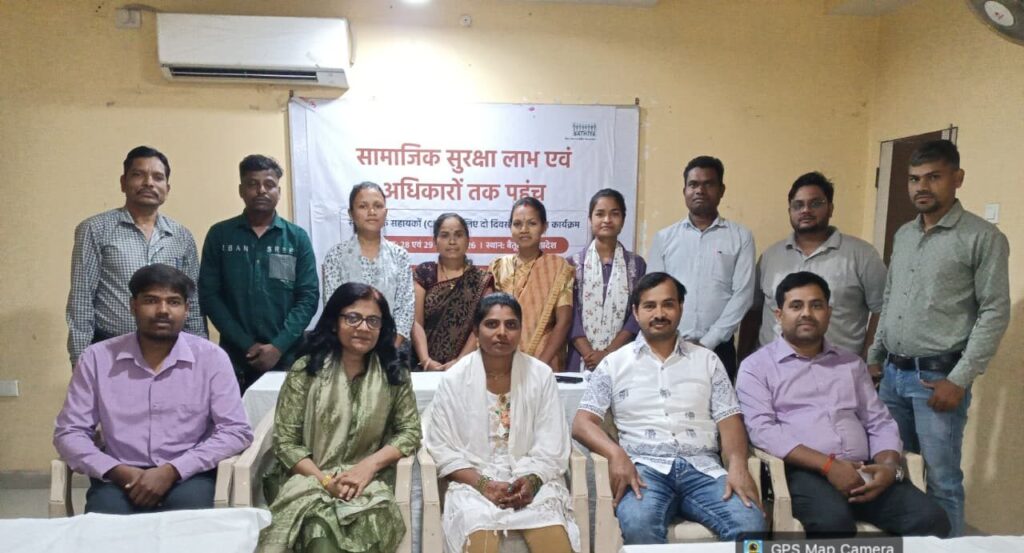
Fifteen participants, every Gram Panchayat represented
The training program brought together 15 participants: all 10 CRPs, one from each target Gram Panchayat, along with five members of the district and state program team. Sessions were facilitated by resource person Mr. Raju Kumar, with the SWS team taking part throughout.
Day one: rights, governance and the power of groups
The first day laid the foundation. After participants shared their expectations, sessions introduced SWS and the project, then turned to the Constitution of India, especially Fundamental Rights and Duties. The discussion covered equality, dignity, justice and democratic participation, along with citizens’ responsibilities.
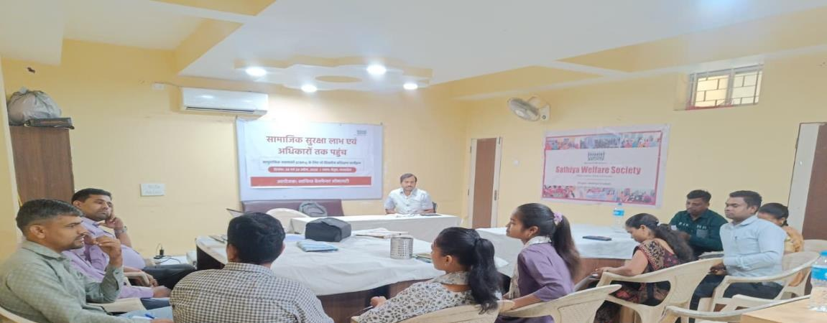
Participants also learned how the Legislature, Executive and Judiciary work, and how elected representatives raise public issues. A session on the three-tier Panchayati Raj system followed, looking at the role panchayats play in securing citizens’ rights. The day closed with community-based groups such as SHGs, FPOs, Ajivika Sangathan and the Jagruk Nagrik Manch, and how they can bring women, youth, men and senior citizens together to support vulnerable households.
Day two: from entitlements to action
The second day opened with a recap of Day 1 to reinforce learning, then moved into practical territory. Through PowerPoint presentations, CRPs studied government welfare schemes: what each offers, who is eligible, which documents are needed and which departments to coordinate with.
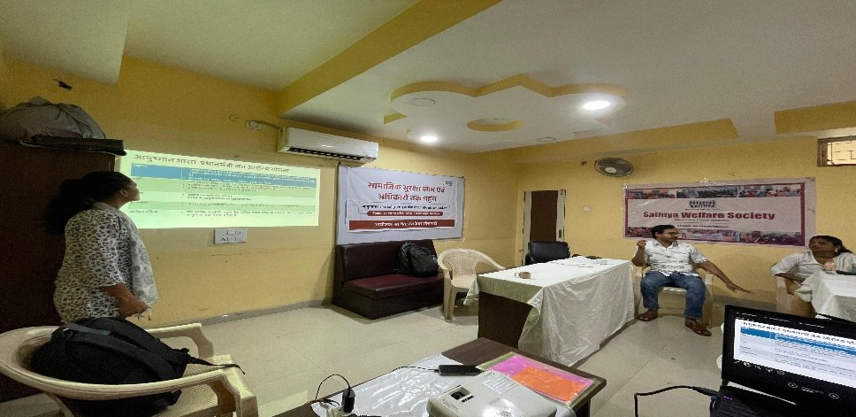
Further sessions explained why the household survey matters and how the Jagruk Nagrik Manch can raise people’s rights at the Gram Sabha and other forums. Participants were advised to stay in regular touch with Anganwadi Centres, Gram Panchayats, schools and government departments. They were also reminded to collect an acknowledgement receipt every time an application or form is submitted, and to keep careful records and evidence of field activities.
Learning by doing: two group exercises
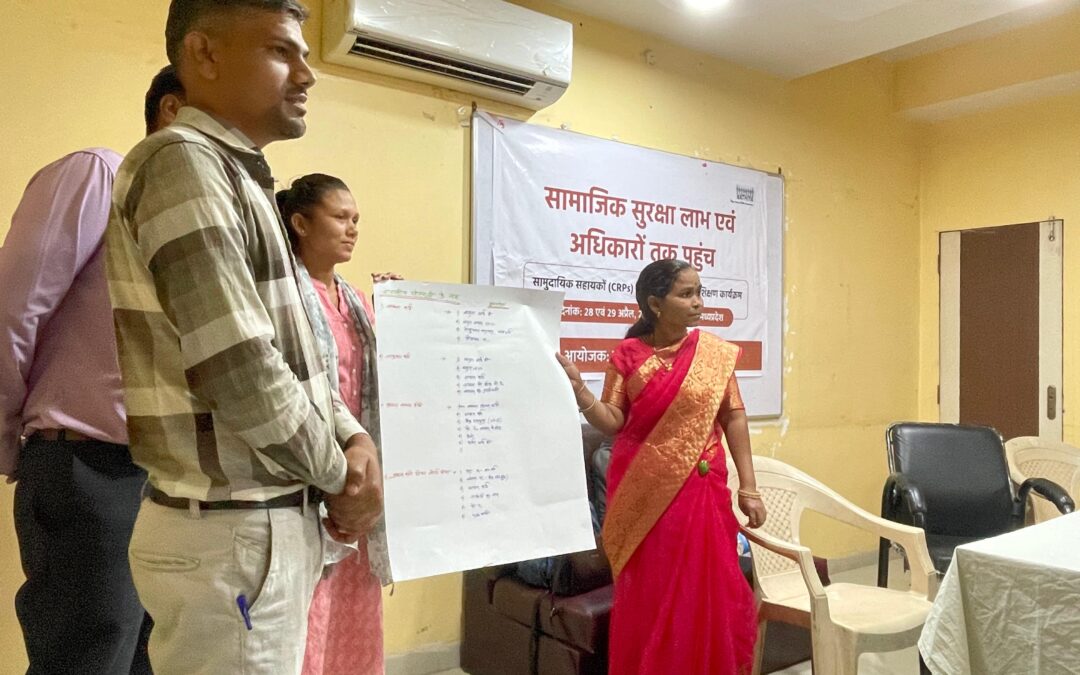
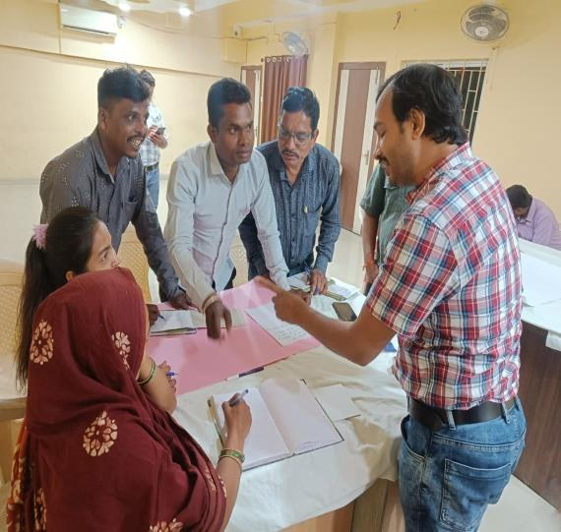
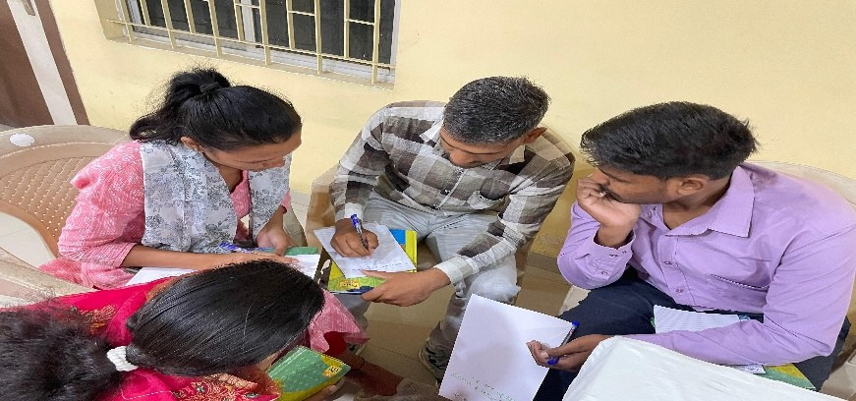
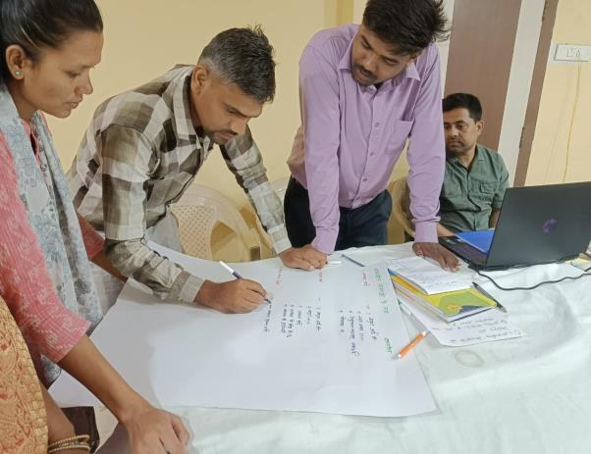
To turn classroom learning into field skills, participants split into two groups and worked with chart paper and open discussion. Group 1 mapped important government schemes relevant to the community, setting out eligibility criteria, required documents and step-by-step application procedures for each.
Group 2 prepared a checklist of essential household documents: Birth Certificate, Aadhaar Card, Ration Card, Bank Passbook, Income Certificate, Caste Certificate, Ayushman Card and Samagra ID. The group stressed the Birth Certificate as the foundational identity document behind access to most other entitlements.
What CRPs took away
- A clear understanding of constitutional rights and the local governance system, including the roles of the Legislature, Executive and Judiciary.
- Practical knowledge of government schemes and their documentation requirements, tested through the eligibility-mapping exercise.
- Clarity on how the Jagruk Nagrik Manch is formed and how it functions in each Gram Panchayat.
- Stronger capacity for community mobilisation and beneficiary support, guided by the household documentation checklist.
- A better grasp of reporting, coordination and documentation, including why acknowledgement receipts must be kept.
The road ahead
With the training complete, the CRP cohort is ready to begin household-level survey and entitlement-linkage work across the 10 Gram Panchayats. The next steps are to roll out the household survey using the documentation checklist, to help each CRP form and orient the Jagruk Nagrik Manch in their Gram Panchayat, to set up a monthly review between CRPs and the district programme team, and to hold periodic refresher sessions as scheme guidelines change. SWS will continue to provide technical and coordination support as the programme moves from training into full field implementation across Betul Block.
Sathiya Welfare Society · “Steps toward better tomorrow…”
Recent Comments