
A door-to-door mobilization drive and a day-long facilitation camp brought banking, healthcare and welfare officials directly to the residents of Arjunwadi — turning paperwork hurdles into 93 completed registrations.
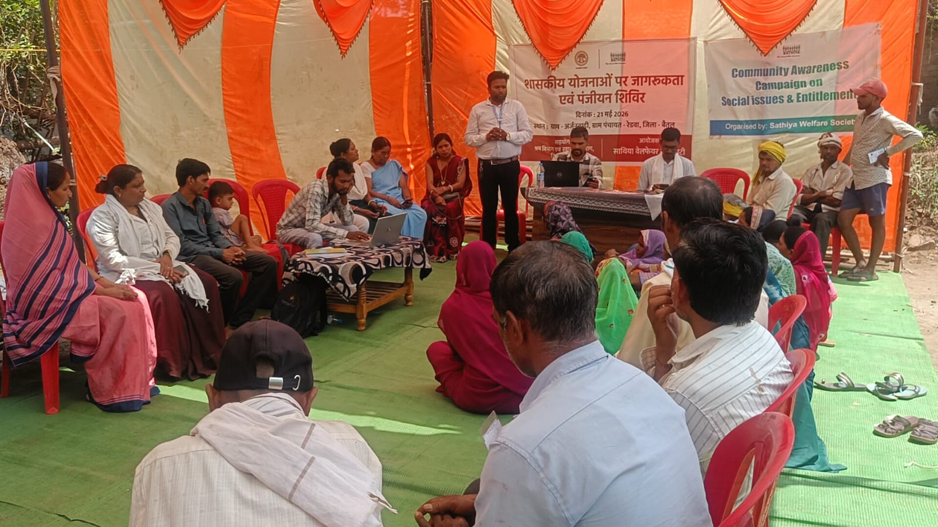
On the morning of 21st May 2026, the quiet lanes of Arjunwadi, a village under Gram Panchayat Redwa in Betul Block, led to a brightly striped tent where chairs filled up fast. Women in bright sarees, elderly men, young parents with children in tow, and local officials in crisp shirts all found a seat — some on chairs, many simply on mats on the ground. They were there for one reason: to make sure the government schemes meant for them actually reached them. The Community Awareness Campaign on Social Issues & Entitlements, organized by Sathiya Welfare Society, is part of an ongoing effort to strengthen access to social security schemes and local governance participation for Dalit and Adivasi households across ten Gram Panchayats of Betul Block. By the end of the day, the numbers told their own story: 105 community members attended, and 93 of them walked away with new or updated registrations in hand.
The Groundwork: Weeks Before the Camp
A camp is only as good as the turnout it draws, and turnout doesn’t happen by accident. In the days leading up to the event, Sathiya Welfare Society volunteers went house to house across Arjunwadi, explaining what the camp would offer and which documents — an Aadhaar Card, a Samagra ID — people should bring along.
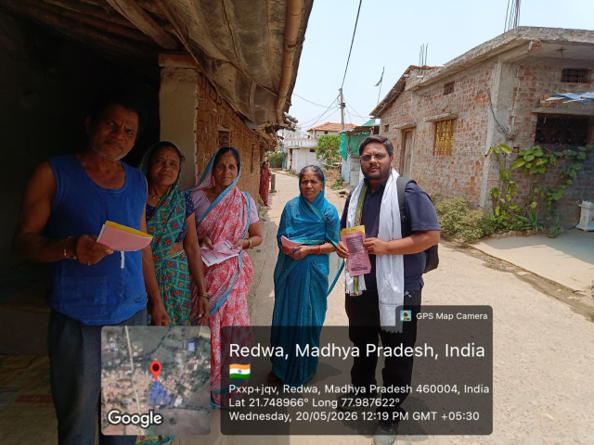
Alongside the household visits, the team worked to build trust in the schemes themselves. Many families had heard of the Ayushman Bharat Scheme but weren’t sure how it worked or whether they qualified — so community sessions focused on breaking that down in plain language.
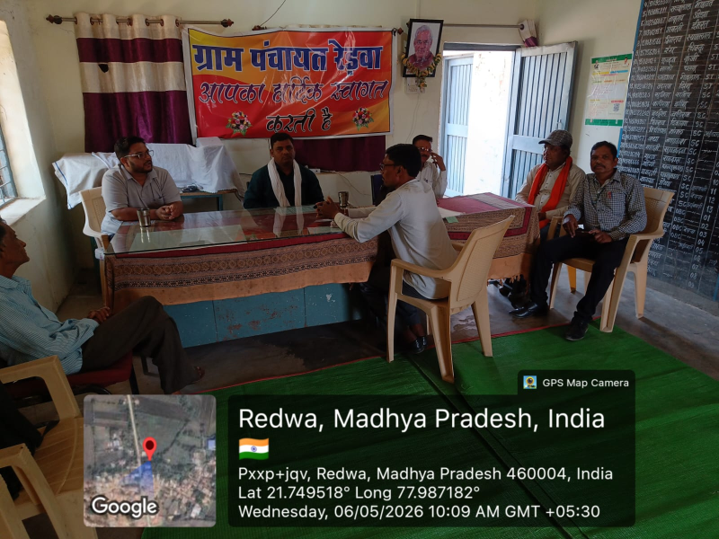
“Close coordination with Panchayat representatives, ASHA workers and Anganwadi workers helped identify eligible beneficiaries and mobilize the community effectively.”
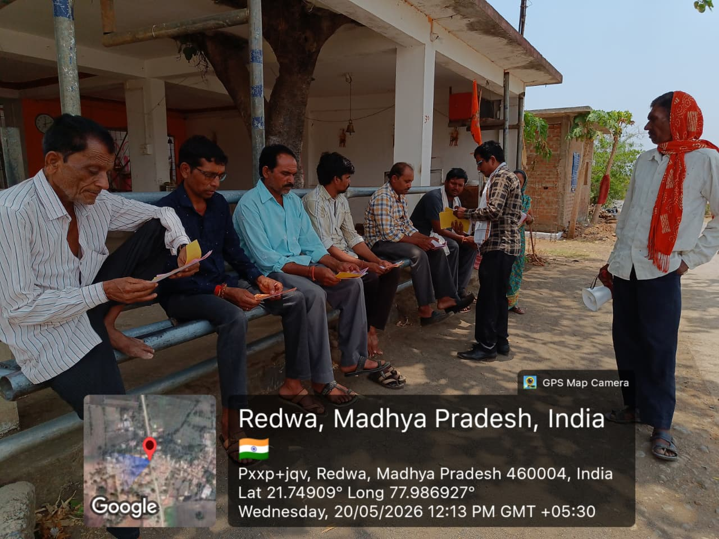
The village’s own Jagruk Nagrik Manch — a local citizens’ awareness group — pitched in too, lending its credibility and local reach to encourage neighbors to attend. Pamphlets went out to every household, and on the final day, a public announcement, or munadi, echoed through the village lanes — a low-tech but effective way of reaching families who hadn’t been contacted directly.
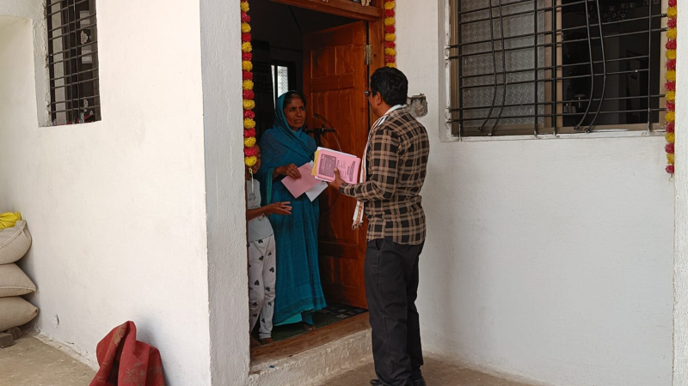
On the Day: Officials, Experts, and a Good Gathering
When the camp opened, it wasn’t just Sathiya Welfare Society staff at the table. Representatives from the Bank of India, the Health Department, and the Gram Panchayat itself sat alongside community resource persons, fielding questions and walking villagers through forms that often get left incomplete simply for lack of guidance. Mr. Aditya Badode of Bank of India spoke about financial inclusion — unpacking the Pradhan Mantri Jeevan Jyoti Bima Yojana (PMJJBY) and Pradhan Mantri Suraksha Bima Yojana (PMSBY), two insurance schemes that offer real financial protection for a very low premium. He also touched on PM SVANidhi Yojana, Direct Benefit Transfer, Lakhpati Didi Yojana, and the importance of keeping KYC details current — a small administrative step that, left undone, can quietly cut families off from benefits they’re entitled to.
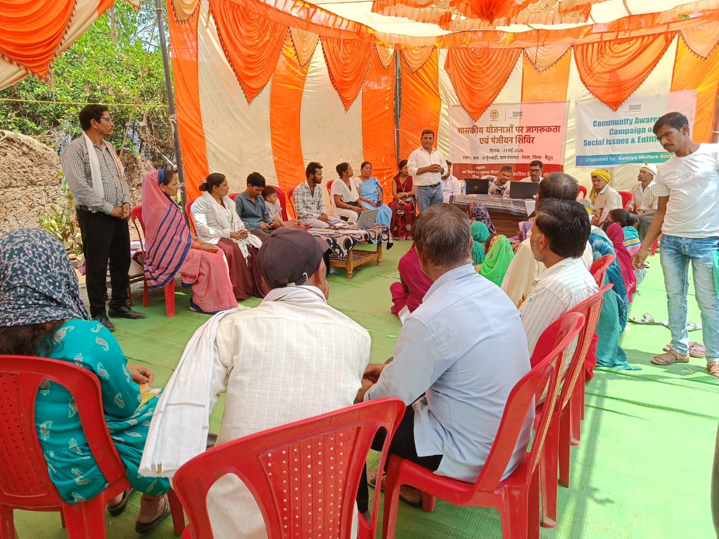
The Health Department’s ANM took the floor next, explaining how the Ayushman Bharat Scheme opens the door to cashless treatment at empaneled hospitals — a safety net that matters most in the moments families can least afford a hospital bill. She also spoke about the Pradhan Mantri Matru Vandana Yojana, maternal healthcare, immunization, and the value of timely registration.
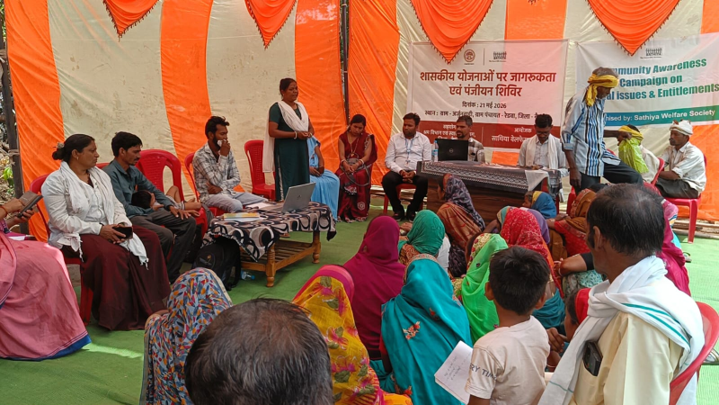
A Health Department Supervisor followed with a session on the Ladli Laxmi Yojana, stressing a point that came up more than once through the day: accurate, up-to-date documents are often the difference between a benefit received on time and one delayed for months. And the Gram Panchayat Secretary closed out the speaker sessions by thanking Sathiya Welfare Society for organizing the camp, before reminding residents to keep their Aadhaar Card, Samagra ID, and bank passbook in order.
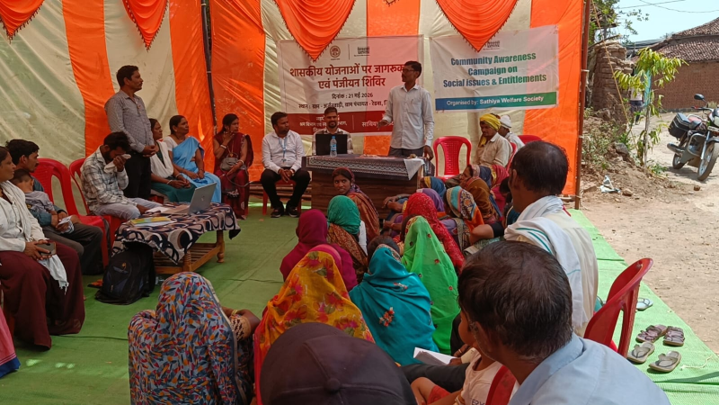
By the Numbers
- 105 community members attended the camp
- 93 registrations were completed on the spot
- 58 registrations for Sambal Yojana
- 31 Ayushman Cards processed
- 4 e-KYC and other registrations completed
Why a Day Like This Matters
It’s easy to think of welfare schemes as existing the moment they’re announced. In practice, the distance between a scheme on paper and a scheme in someone’s hands is often just information, paperwork, and a little guidance — exactly what a camp like this one is built to close.
For the families of Arjunwadi, the 21st of May wasn’t just an awareness event. It was pensions discussed, Ayushman cards issued, labour registrations started, and questions — the kind that often go unasked — finally getting answered face to face with the people who could answer them. Sathiya Welfare Society’s work in Arjunwadi is one chapter in a wider effort across ten Gram Panchayats of Betul Block, aimed at strengthening how Dalit and Adivasi households access social security entitlements and participate in local governance. The organization continues to carry this model — mobilize first, then facilitate — from village to village across the block.
Recent Comments